Museo de Arte Contemporáneo de Bahréin [Zaha Hadid Architects].
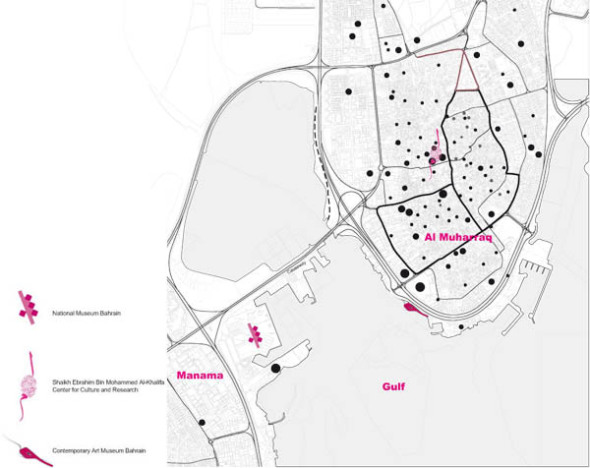
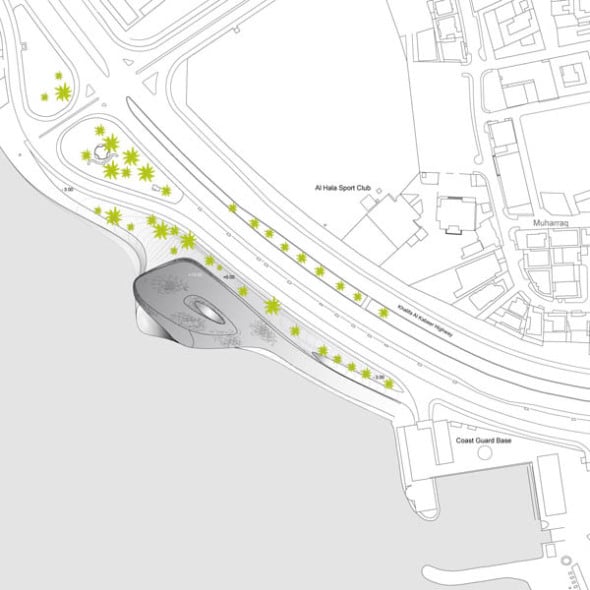
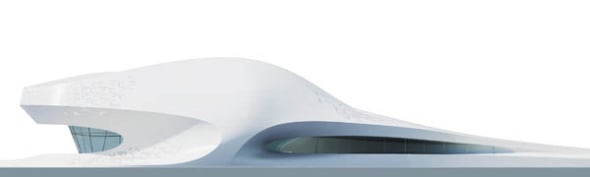
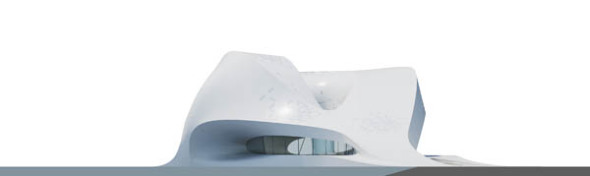
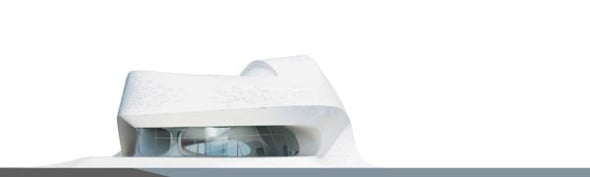
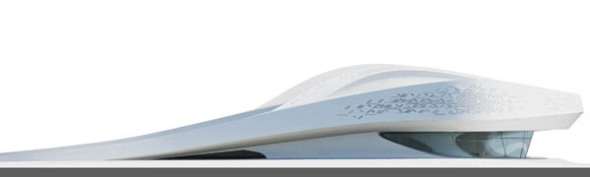
A cargo de Zaha Hadid Architects, el volumen del museo emerge desde la angosta costa del Golfo de Bahréin. Describiendo una grácil curva, el volumen de sutiles formas se levanta gradualmente del terreno y avanza sobre el agua hacia Manama, la capital. La escultural masa del edificio aparenta flotar sobre el paisaje de la costa, rodeado por un espacio público que parece hablar su mismo lenguaje.
![Museo de Arte Contemporáneo de Bahréin [Zaha Hadid Architects].](//images.arq.com.mx/eyecatcher/590590/10432.jpg)
El volumen del museo emerge desde la angosta costa del Golfo de Bahréin. Describiendo una grácil curva, el volumen de sutiles formas se levanta gradualmente del terreno y avanza sobre el agua hacia Manama, la capital. La escultural masa del edificio aparenta flotar sobre el paisaje de la costa, rodeado por un espacio público que parece hablar su mismo lenguaje. El dinamismo y fluidez del conjunto enfatiza el movimiento que rodea y atraviesa el museo.

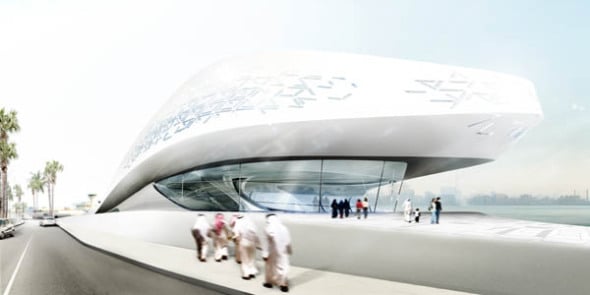
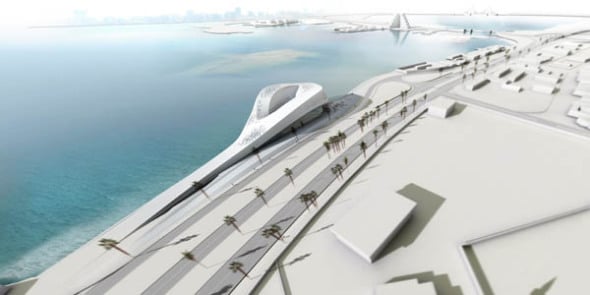
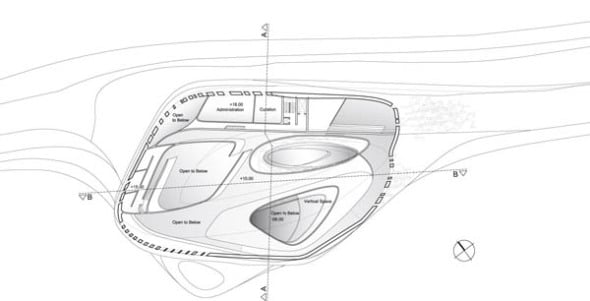
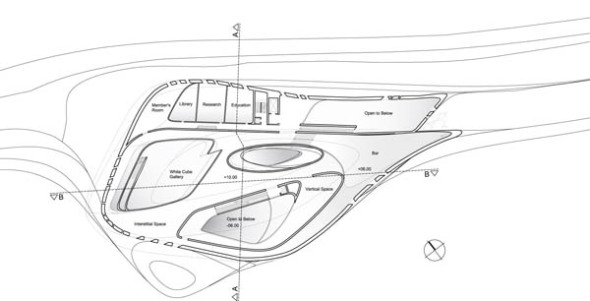
Con un gesto de invitación y bienvenida, el edificio se eleva hacia la entrada principal, situada al norte. El voladizo crea una marquesina que proporciona un espacio público con sombra. Esta configuración crea una separación natural de los espacios de las galerías. El volumen elevado contiene las tres unidades principales del programa, estando articuladas como cápsulas en relación con el conjunto. Estos volúmenes internos crean múltiples maneras de entender el edificio como un todo que está formado por partes integradas. La idea general del proyecto posee cualidades que se derivan de la arquitectura tradicional islámica.
El concepto espacial del museo funciona desde dentro hacia afuera. El proyecto sigue un concepto híbrido: por un lado está basado en los precedentes de los museos tradicionales y contemporáneos y, por otro, en el conocimiento de que es imposible conseguir un auténtico espacio neutral, que únicamente muestre los artículos expuestos. El objetivo de este concepto de museo híbrido es adaptar la sutil edificación para albergar exposiciones itinerantes, proporcionando galerías con carácteres distintos que mejoran la experiencia artística del visitante, la creatividad y la exposición de las obras de los artistas.
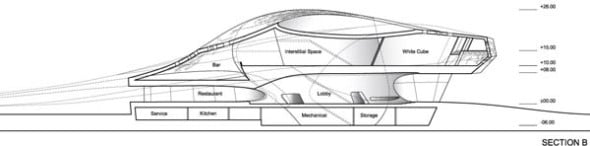
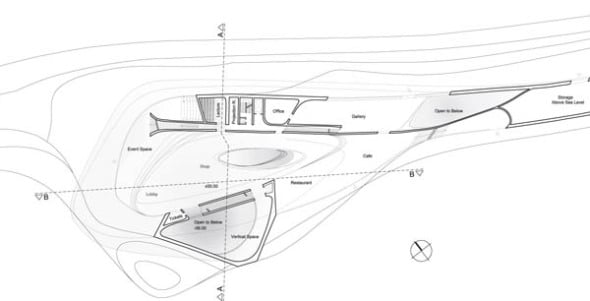
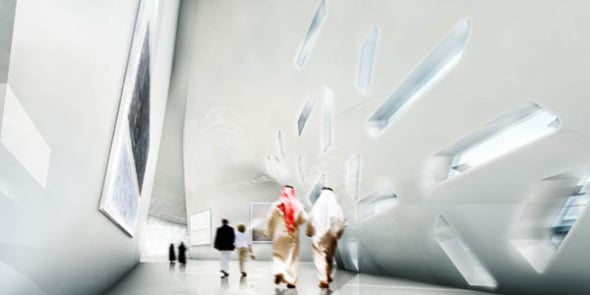
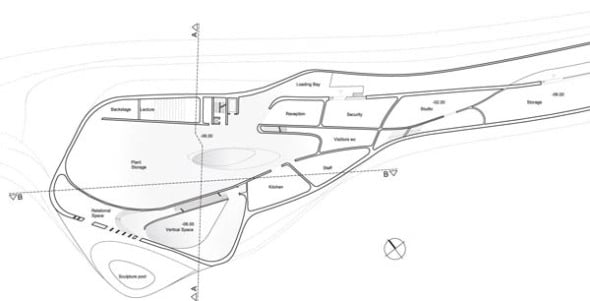
La forma y organización del museo permite una ruta ininterrumpida a través de una serie de galerías y zonas con diferentes cualidades espaciales. El carácter de cada espacio está definido y generado por la geometría y la proporción de las estancias, así como por su relación con el contexto inmediato.
Las cápsulas de exposición proporcionan un espacio contenido, embebido a su vez en la envoltura del edificio. El espacio intersticial entre las cápsulas y el cerramiento exterior conforman su propio espacio de exhibición con continuas variaciones espaciales. Las conexiones visuales y físicas con las zonas no expositivas del museo y con el exterior, hacia el paisaje costero, garantizan una emocionante y estimulante experiencia artística en cualquier zona del museo.
 Créditos:
Compilación por equipo de colaboradores de Buscador de Arquitectura
Texto Solares, D. (2009, 31 agosto). ufetetecnico.es. Recuperado de bit.ly/3636OGV
Imágenes Zaha Hadid Architects

Agregar un comentario
<< Artículo Anterior
Siguiente Artículo >>

 Boletín de Arquitectura
 RSS
RSS Twitter
 Facebook





![Museo de Arte Contemporáneo de Bahréin [Zaha Hadid Architects].](http://images.arq.com.mx/eyecatcher/590590/10432.jpg)


 el museo
,
2009-09-22
el museo
,
2009-09-22
 calificacion
,
2009-09-24
calificacion
,
2009-09-24